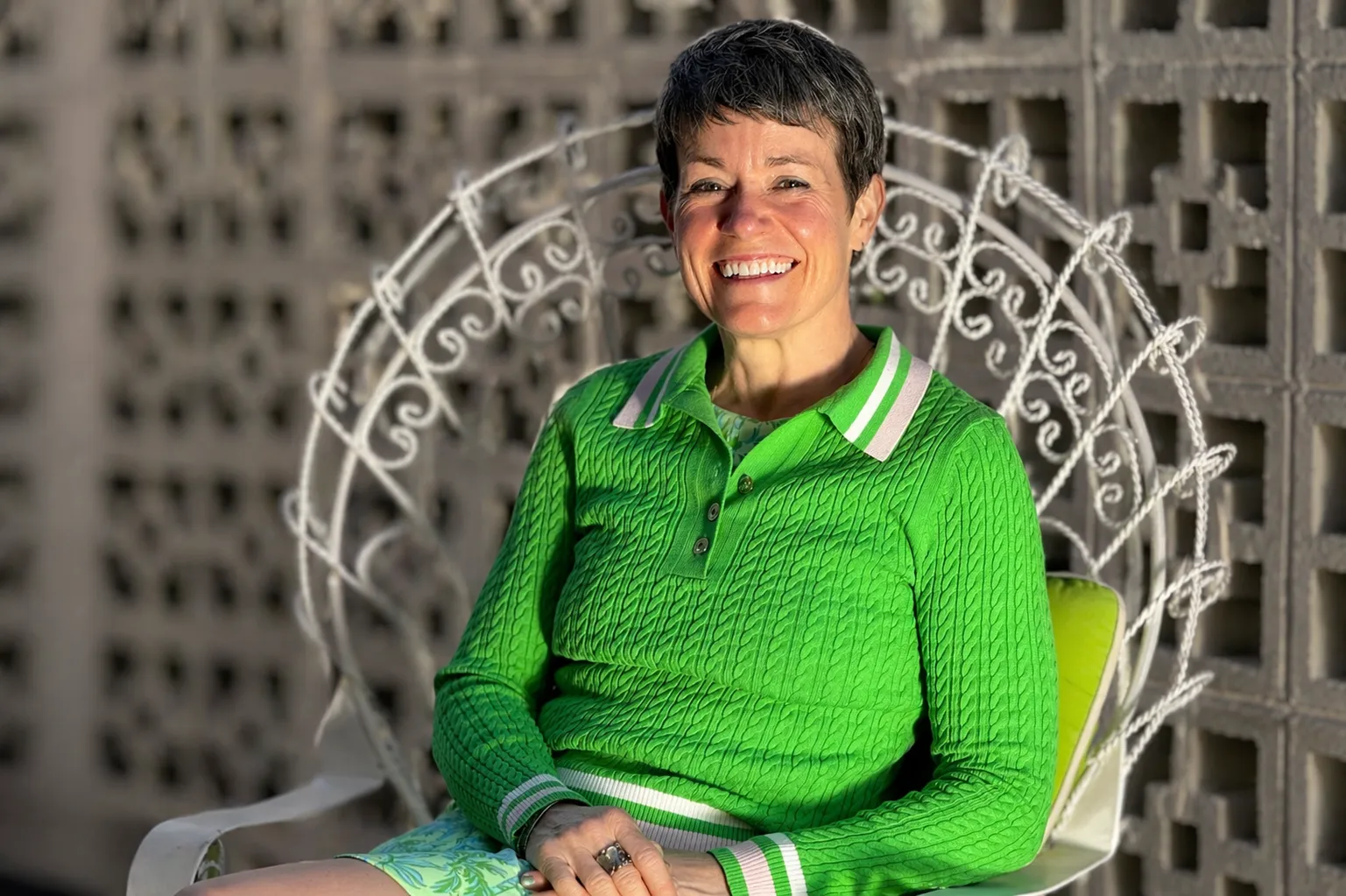
Is Track Record the New Red Flag? 5 Hot Takes From the Recast Summit
Is Track Record the New Red Flag? Five Hot Takes From the Recast Summit
Written at 37,000 feet, somewhere between Palm Springs and Atlanta.
Venture is crossing a desert. Seed and Series A pricing has gone volcanic in a way that makes even the 2021 comps look linear — and on the other end of the capital canyon, LP flows have never been more frozen. Ninety cents of every institutional dollar is disappearing into mega funds, leaving huge oases of opportunity parched for capital. The opportunity map for new green zones is begin redrawn.
Against that backdrop, two of the most deeply experienced and respected fund-of-funds investors in the world — Courtney McCrae, formerly of WeatherGage, and Sarah Zulkosky, formerly of GreenSpring Capital — have curated the path less traveled. They founded Recast, and through it, they are carrying water and inspiration to concentrated green shoots of the innovation economy only expert guides like they can spot. Courtney and Sarah's leadership is the kind that doesn't ask for credit; it just keeps making the well deeper for everyone. My admiration for both of them and their team is enormous and, after this week, renewed.
I was lucky enough to be one of just 100 people invited to this year's Recast Summit at Parker Palm Springs. Emerging managers, thought leaders, and exceptional LPs explore, candidly and without the main-stage theater, the currents in venture capital with staying power. Chatham House rules, so I'm not naming anyone and not quoting directly. But here are five provocative takes I'm still chewing on as the desert sunset recedes behind the wings on my Delta ride.
1. Track record might be the most overrated signal in venture right now.
This one surprised me — not because I disagreed, but because of who said it. One of the institutional LPs in the room remarked that in today's market they are more skeptical of track record than of almost any other signal in a pitch.
The thought process: a track record built in a fundamentally different system — pre-AI, pre-capital-compression, back when coding an MVP still required a team and six months — is a track record in a different alphabet. Funds that returned 5x in 2015 were solving a different problem, with a different diligence muscle, in a different interest-rate world. What those numbers demonstrate is not necessarily repeatable; at worst, they are a lagging indicator of skills the market no longer rewards. Now that coding is table stakes, diligence has to move to where code can't reach — and the honest question is whether the GPs with the hottest logos have actually studied new swim strokes, or are simply floating on momentum from past kicks.
2. To the biggest asset owners on the planet, venture is a rounding error — and the Magnificent 7 is the AI trade.
Pensions and sovereigns — the universal asset owners whose flows actually move markets — often allocate less single digits to venture. When their boards ask about AI exposure, they are not thinking about Valor's next Series A; they are thinking about Nvidia, Microsoft, and Meta.
For me, the implications are interesting and underscore Valor's platform to thoughtfully introduce our portfolio firms to strategics with the budget and the ambition to outcompete at the world's biggest AI betting market--M&A.
3. The correction is already four years overdue.
The yield curve inverted for roughly half a year before ChatGPT arrived in late 2022. In any previous cycle, that's a recession signal you can set your watch by. It hasn't happened. By several plausible macro measures, we are now four years late on a correction that historically would already have reshaped allocations.
One LP described the private credit picture as "constipation" — capital announced but not deployed, pipelines clogged, data-center maturity mismatch stacking up between "broke ground" and "actually profitable." Public markets are struggling to digest it. Most U.S. pension funds, blue and red, are still underfunded from the last crisis and are in no position for the next one.
The provocation here isn't "a crash is coming." It's the question of how LPs can position now to be more resilient and less reliant on constipated, potentially overstuffed firms in vogue today.
4. $330 billion is sitting in donor-advised funds — stagnant.
One of the most quietly radical conversations at Recast was about philanthropic capital as a source of institutional-grade checks for emerging managers. DAFs are the fastest-growing vehicle in philanthropy, and the number — north of $330 billion sitting effectively idle — is genuinely shocking.
Here's the hot take: almost every GP in the room who had tried to tap this pool directly had failed. Cold-calling DAF sponsors is a near-guaranteed waste of time. The real door isn't a sponsor. The real door is an angel or a family-office LP already in your network who happens to have a DAF they've never used for this. The capital is sitting in a checkbook your investors didn't know they could open. Your job isn't to discover new capital. It's to reframe what the capital you already know about can do. I came away from that session sharing with Jean Luc, my husband "we're opening a DAF" to tap the tax benefits of all the gifts we make today to non 501c3 situations of need, and to keep our anonymity.
5. "Please follow up" is the only LP signal with spice
Good LPs — sophisticated ones, well-meaning ones — have almost no structural incentive to tell you a clean no. The result is that most emerging managers are systematically misreading nine out of ten LP conversations.
Two practical moves surfaced at Recast. First, replace "Will you invest?" with "Does what I'm building resonate with you?" The second question gets you real feedback; the first gets you politeness. Second, treat "please keep me posted" as the single highest-signal phrase in the entire LP vocabulary. It is not a brush-off — it's a quietly binding ask. LPs who say it tend to actually show up in diligence. LPs who don't say it, won't.
Where does the new value in venture flow over the next decade?
If I were to synthesize Recast into a sentence, it is this: the old well is stale and murky. The new wells are also shallow enough at this stage of the cycle it's hard to separate which emerging new strategies will create the oases of the next 20 years.
Courtney and Sarah and their larger team are building the room where core, critical conversations are happening. I'm grateful to have joined the conversations at these sunny and enlightening tables. I'm even more grateful to be flying home to a firm — and a South — that is exactly the kind of fresh well diligent capital is beginning to thirst for.
Where do you think the real value in venture flows over the next decade? I genuinely want to know.